
Views: 0 Author: Green Hydraulic Publish Time: 2026-01-06 Origin: Site


Hydraulic piston pumps are indispensable components in modern hydraulic systems, powering everything from heavy machinery and construction equipment to industrial presses and mobile vehicles. Known for their efficiency, durability, and high-pressure capabilities, piston pumps are widely used in applications where performance and reliability are paramount.
A hydraulic piston pump is a positive displacement pump that converts mechanical energy into hydraulic energy by using one or more pistons to push fluid within a cylinder. As the piston reciprocates within the cylinder, it draws in hydraulic fluid through an inlet valve and then expels it at high pressure through an outlet valve. This reciprocating motion creates a steady flow of pressurized fluid, which is crucial for the power output of a hydraulic system.

There are two main types of piston pumps used in hydraulic systems:
These pumps use a swashplate and drive shaft to drive the pistons within the cylinder block.The rotation of the drive shaft causes the pistons to reciprocate, drawing in and expelling hydraulic fluid. Axial piston pumps are suitable for applications requiring high pressure and high efficiency.
In these pumps, the pistons are arranged radially around a rotor cam. As the pump rotates,each piston reciprocates within its cylinder, creating the suction and discharge cycles. Radial piston pumps are often used in applications requiring specific torque and pressure curves.

Choosing the ideal hydraulic piston pump depends on your system requirements:
Pressure Requirements – High-pressure systems typically benefit from piston pumps.
Flow Requirements – Variable displacement pumps offer better control over flow rate depending on changing operating conditions.
Mechanical Application – Heavy-duty industrial tools and mobile equipment may require piston pumps over other types of pumps.

Can easily handle high pressures, making them ideal for demanding machinery.
Provide precise flow control, ensuring stable and consistent operation.
Operate reliably even under harsh conditions, providing long-lasting performance. For applications in construction, agriculture, and industrial machinery, piston pumps provide the necessary efficiency to ensure your system runs smoothly.
As a customer, you can trust Green Hydraulic for the following reasons:
Our factory has 3 branches,located in Changzhou, Shandong and Zhejiang respectively,covering a total area of 8000 square meters.

Our piston pumps, gear pumps, hydraulic cylinders, and other components are built to last. We utilize the latest technology and rigorous testing methods to ensure all products meet international quality standards.

We are proud to serve over 60 countries worldwide, providing first-class hydraulic solutions globally. Our products are trusted in regions such as the United States, Germany, Brazil, Russia, and Southeast Asia.

We offer OEM and ODM services, allowing us to customize hydraulic components to your specific needs.
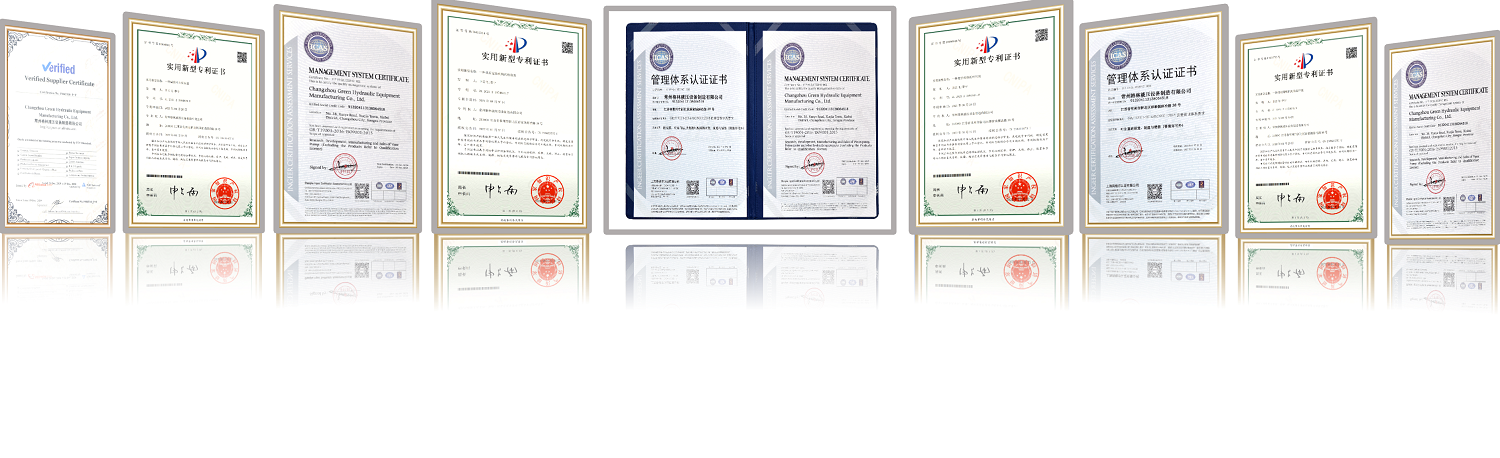
Green Hydraulic is ISO9001 certified, CE certified, and complies with EU RoHS standards. This ensures all our products meet the highest global quality and safety standards. In addition, some of our products are UL certified, further enhancing reliability.
We provide ongoing technical support and after-sales service to ensure your system always performs at its best.

Once your product is manufactured and confirmed with you, it will be packaged and shipped within 6 hours.

Insufficient oil intake (air leak, low oil level, clogged filter), severe internal leakage (valve, seal, distribution plate), overflow valve malfunction or pressure adjustment too low. Pressure too high: Abnormal increase in system load or overflow valve stuck (burrs/dirt stuck in the closed position).
Variable mechanism control component damage, controller position deviation, air ingress into the pump, or spool valve sticking.
Low oil level, clogged/leaking suction line, clogged oil filter, low oil temperature leading to high oil viscosity and reduced self-priming ability.
Wear/scratches on the mating surfaces of the plunger, cylinder block, and distribution plate.
Damage to variable displacement mechanism control components or entry of foreign objects.
Incomplete air removal during installation, air leaks at the suction port, or low oil level in the tank. Asymmetrical installation: Pump shaft and motor shaft are not concentric, resulting in radial force. Hydraulic oil problems: Excessive viscosity, low oil temperature.
Bearings, couplings, plunger and cylinder block, distribution plate, etc.
Pump speed coincides with the system's natural frequency.
Damaged main shaft oil seal, loose/damaged oil pipes, aging seals, variable displacement mechanism seal failure. Internal leakage: Excessive clearance, scratched distribution plate, high internal pressure damaging the oil seal. Drain pipe problems: Too narrow or too long, leading to increased back pressure.
Improper clearance between moving parts, dry friction. Fluid friction/internal leakage: High-pressure oil leaks through gaps into the low-pressure chamber (internal leakage). Return line blockage: Clogged return filter, leading to excessive back pressure.
Ensure sufficient oil level in the tank, fill the pump with hydraulic oil, and run at low speed to vent air.
Monitor oil temperature, pressure, and noise, and regularly check the cleanliness of the hydraulic fluid.
Tighten pipelines and bolts, and check for aging seals. Regular maintenance: Analyze the hydraulic oil and replace clogged filter elements.
Refer to the system diagram and start checking from the simplest and easiest to check points (such as oil level, air leaks).
By understanding how hydraulic piston pumps work and why Green Hydraulic is the trusted choice for hydraulic components, you can make informed decisions that enhance the performance and reliability of your systems.

