
Views: 0 Author: Site Editor Publish Time: 2026-02-02 Origin: Site


If you are designing or maintaining an advanced hydraulic system, choosing the right pump is crucial for the system's performance and reliability. Among the many options, radial piston pumps stand out for their high-pressure capacity, precise flow control, and robust operation. This article explains what radial piston pumps are, how they work, their advantages, and why they are widely used in industrial applications.
A radial piston pump is a positive displacement hydraulic pump with multiple piston cylinders arranged radially around a central drive shaft. As the drive shaft rotates, each piston reciprocates (moves back and forth), drawing hydraulic oil from the inlet and expelling it at high pressure to the outlet. This design enables uniform pressure distribution, high efficiency, and excellent stability.
Unlike axial piston pumps, where the piston is parallel to the drive shaft, the piston in a radial piston pump is perpendicular to the drive shaft, resulting in higher torque, greater pressure capacity, and better reliability under heavy loads.
The working principle of radial piston pumps is simple and efficient:
Suction Stroke: As the drive shaft rotates, a cam or eccentric wheel pulls each piston outward, creating a low-pressure zone. This suction draws hydraulic oil into the cylinder.
Discharge Stroke: During rotation, the pistons move inward, expelling hydraulic oil at high pressure from the cylinder into the discharge port.
Continuous Flow: The radial arrangement ensures that the pistons operate in staggered phases, resulting in smooth, continuous fluid flow and minimizing the pulsation common in other types of pumps.
This design provides high-pressure output, precise fluid motion, and optimal performance under heavy loads.
Radial piston pumps are widely used in demanding hydraulic systems due to their numerous superior advantages:
Radial piston pumps can operate efficiently at extremely high pressures, typically outperforming gear pumps and vane pumps. This makes them ideal for heavy-duty industrial applications such as hydraulic presses and high-pressure testing systems.
The multi-plunger radial design ensures stable fluid flow and minimizes vibration or pulsation, thereby improving system response and reducing wear on downstream components.
Because these pumps deliver a consistent displacement per revolution, they maintain high energy efficiency even under varying loads. This contributes to lower operating costs in the long term.
Made with durable materials and precision machining, radial piston pumps can withstand high stresses and offer a long service life even in harsh environments.
Radial piston pumps offer adjustable displacement options and maintain stable performance at both low and high speeds, making them suitable for a wide range of hydraulic systems.
These pumps are widely used in industries with high requirements for pressure, accuracy, and reliability:
Industrial presses and forming machines
Hydraulic power units (HPUs)
Oil and gas equipment
Construction and heavy machinery
Mining and drilling systems
High-pressure cleaning systems
Radial piston pumps can continuously deliver high pressure, making them ideal for applications requiring powerful fluid dynamics.
| Feature | Radial piston Pump | Gear Pump | Vane Pump |
|---|---|---|---|
| Pressure Capability | Very high | Medium | Medium |
| Flow Stability | Excellent | Good | Good |
| Efficiency | High | Moderate | Moderate |
| Cost | Higher | Lower | Moderate |
| Maintenance | Moderate | Easy | Easy |
| Best For | High-pressure, heavy-load systems | Budget-friendly systems | Smooth flow needs |
When your application requires high pressure, stable flow, and sustained performance, a radial piston pump should be your first choice. They offer:
Lower system pulsation
Higher efficiency
Stable performance under heavy loads
Longer service life
Better precision hydraulic system control
Radial piston pumps combine strength, accuracy, and durability, making them ideal for demanding hydraulic applications across various industries. Their smooth fluid delivery, ability to withstand extreme pressures, and reliable operation help ensure optimal performance in heavy-duty systems.
As a customer, you can trust Green Hydraulic for the following reasons:
Production Base: Our factory has 3 branches,located in Changzhou, Shandong and Zhejiang respectively,covering a total area of 8000 square meters.

High-Quality Products: Our piston pumps, gear pumps, hydraulic cylinders, and other components are built to last. We utilize the latest technology and rigorous testing methods to ensure all products meet international quality standards.

Global Presence: We are proud to serve over 60 countries worldwide, providing first-class hydraulic solutions globally. Our products are trusted in regions such as the United States, Germany, Brazil, Russia, and Southeast Asia.

Customized Services: Need a specific product? We offer OEM and ODM services, allowing us to customize hydraulic components to your specific needs.

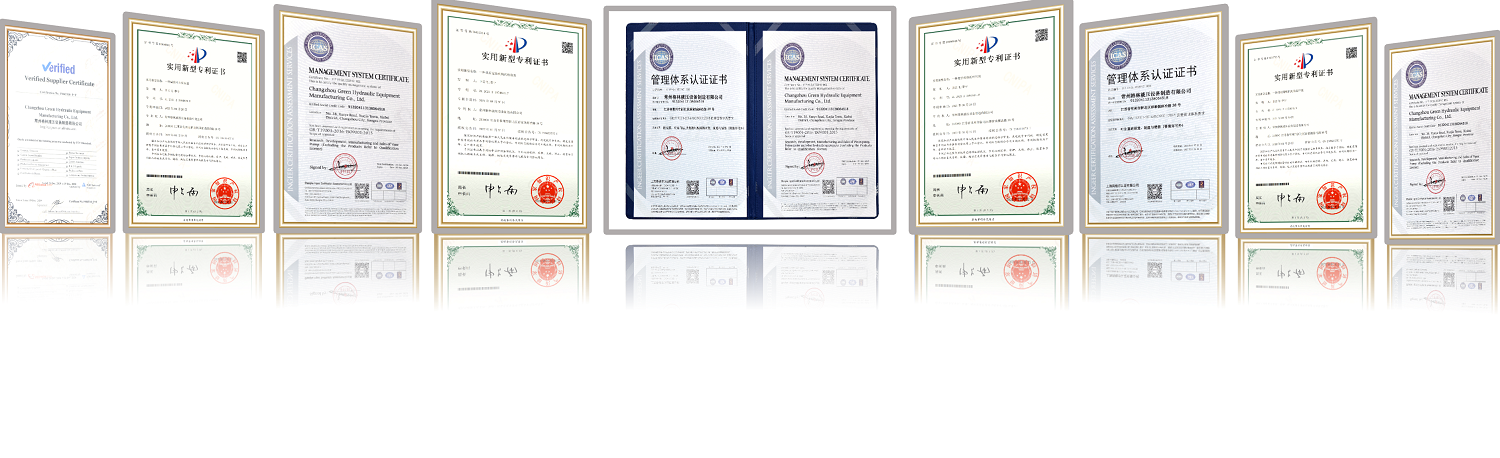
Quality Certifications: Green Hydraulic is ISO9001 certified, CE certified, and complies with EU RoHS standards. This ensures all our products meet the highest global quality and safety standards. In addition, some of our products are UL certified, further enhancing reliability.
Comprehensive Support: We provide ongoing technical support and after-sales service to ensure your system always performs at its best.

Fast Shipping: Once your product is manufactured and confirmed with you, it will be packaged and shipped within 6 hours.

They offer exceptional durability in harsh environments and can generate very high pressures (up to 700-1000 bar) compared to gear or vane pumps.
Radial: Pistons are arranged radially (spoke-like) around the shaft.
Axial: Pistons are parallel to the shaft.
Radial pumps generally handle higher pressures and provide better service life under extreme conditions.
They are used in high-pressure hydraulic presses, marine hydraulics, heavy machinery, and testing rigs where constant flow and reliability are critical.
Radial pumps are often chosen for extreme, high-pressure, constant-flow applications and are capable of handling various fluid types.
Common causes include oil contamination (leading to wear), cavitation from restricted inlet lines, and pressure spikes that cause fatigue.
Yes, many radial piston pumps are suitable for mineral oil, water-glycol, and other hydraulic fluids.
Due to their precision parts, maintaining clean oil is critical. Regular inspection for leaks, noise, and checking of seals is recommended to ensure a long life, which can exceed 10 years.

