
English
Please Choose Your Language
Views: 0 Author: Site Editor Publish Time: 2026-01-14 Origin: Site


Hydraulic valves play a crucial role in fluid power systems by controlling the direction, flow, and pressure of hydraulic fluid. Whether you're designing a system for industrial machinery, construction equipment, or mobile hydraulics, choosing the right valve type is essential for performance, efficiency, and safety. In this guide, we explain the four main types of valves used in hydraulic systems, why they matter, and how to select the best one for your needs.
Directional control valves are the backbone of any hydraulic circuit. These valves manage the direction of fluid flow, determining where hydraulic oil goes within the system.
By shifting internal spools or gates, they can connect different flow paths — for example, sending oil to extend a hydraulic cylinder or activating a motor.
Mobile machinery (excavators, forklifts, dump trucks) Industrial automation systems Material handling equipment
Without precise directional control, a hydraulic system cannot effectively start, stop, or reverse movement — making these valves essential for system control and flexibility.
Flow control valves regulate the speed of hydraulic actuators by controlling the amount of fluid delivered.
Adjusting fluid flow to control the speed of cylinders or motors Balancing flow distribution in multi‑actuator systems Reducing energy waste and system heat
Adjustable flow valves Orifice and throttle valves Priority flow control systems
Precise flow control improves machine responsiveness, energy efficiency, and operational accuracy, especially in applications where speed matters.
Pressure control valves ensure safe and efficient operation by managing hydraulic system pressure.
Relief Valves – Protect the system from over‑pressure by opening at a set pressure Pressure Reducing Valves – Control pressure for specific sections of the circuit Sequence Valves – Ensure operations occur in a set order based on pressure
Too much pressure can lead to leaks, component failure, or system damage. Pressure control valves act as the system’s “safety guard,” protecting equipment and operators.
Check valves allow hydraulic fluid to flow in only one direction, preventing backflow and maintaining system stability.
Simple yet vital for preventing unwanted reverse flow Can be built as poppet, ball, or shuttle designs Often used in conjunction with other valve types for safety
Holding cylinders in position Protecting pumps from reverse rotation Ensuring reliable accumulator function
When selecting hydraulic valves, consider:
System Pressure Requirements – Ensure the valve can handle operational PSI Flow Capacity (GPM/LPM)– Match valve flow rate with system demand Control Accuracy – High‑precision valves improve performance Environmental Conditions – Harsh environments require rugged valve designs Certifications & Standards – ISO, CE, RoHS compliance ensure quality
Choosing the wrong valve can lead to:
System performance loss Increased wear and maintenance costs Safety hazards Inefficient energy use
Correct valve selection enhances system efficiency, longevity, and safety, helping you get the most out of your hydraulic design.
At Green Hydraulic, we deliver high‑quality hydraulic valves, including:
| Valve Type | Core Function | Typical Hydraulic Applications | Key Advantages | Key Limitations | Key Selection Parameters |
|---|---|---|---|---|---|
| Directional Control | Directs fluid flow and changes path | Actuator direction change (cylinders, motors), multi-circuit switching | Fast switching, flexible circuit layout | Higher cost, more potential leakage paths | Port count/positions (2/2, 3/2, 4/3), Q (flow rate), P (pressure rating), actuation type (manual/solenoid/pilot) |
| Pressure Control | Regulates or limits pressure | Over-pressure protection, sub-circuit pressure setting, load holding | Improves safety, protects components | Cost/complexity, alone does not manage flow | Set pressure, type (relief, reducing, sequence, counterbalance), leakage/response time, fluid compatibility |
| Flow Control | Regulates flow (speed/volume) | Controlling cylinder speed, motor speed, energy-saving circuits | Precise speed control, potential energy savings | Pressure drop (efficiency loss), sizing critical | Max flow Q, allowable ΔP (pressure drop), fixed/adjustable/pressure-compensated type, fluid/media compatibility |
| Check / Load-Holding | Allows one-way flow or holds load | Preventing reverse flow into pump/reservoir, hold cylinder/ram position | Simple, reliable, inherent safety | Limited function (just one-way or hold) | Cracking/opening pressure, leakage when closed (important if holding), max pressure/flow rating, orientation/install direction |
As a customer, you can trust Green Hydraulic for the following reasons:
Production Base: Our factory has 3 branches,located in Changzhou, Shandong and Zhejiang respectively,covering a total area of 8000 square meters.

High-Quality Products: Our piston pumps, gear pumps, hydraulic cylinders, and other components are built to last. We utilize the latest technology and rigorous testing methods to ensure all products meet international quality standards.

Global Presence: We are proud to serve over 60 countries worldwide, providing first-class hydraulic solutions globally. Our products are trusted in regions such as the United States, Germany, Brazil, Russia, and Southeast Asia.

Customized Services: Need a specific product? We offer OEM and ODM services, allowing us to customize hydraulic components to your specific needs.

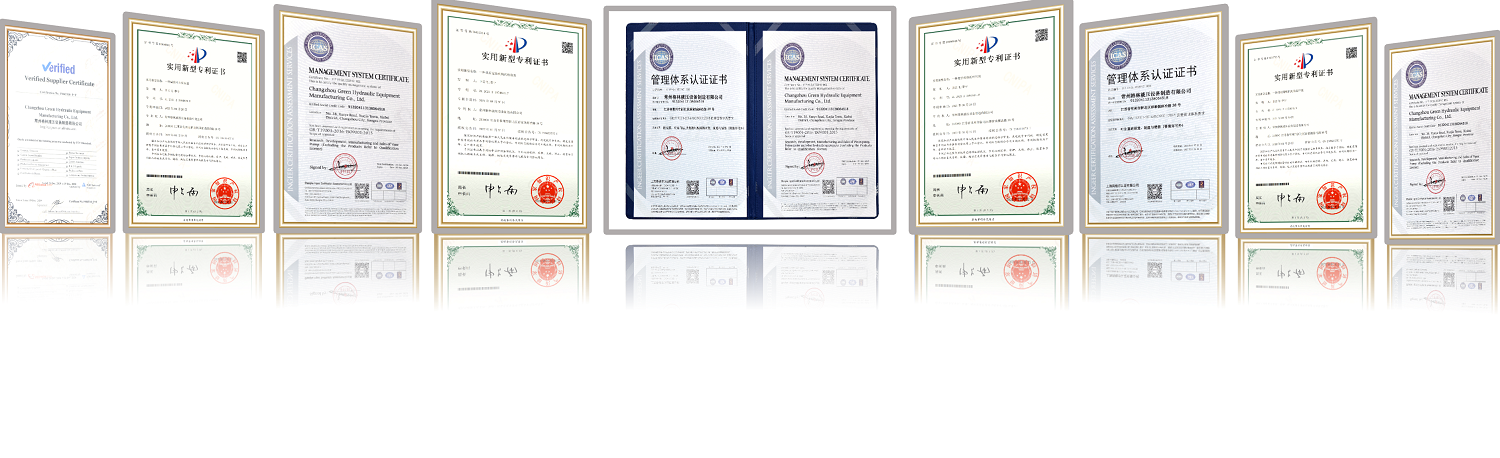
Quality Certifications: Green Hydraulic is ISO9001 certified, CE certified, and complies with EU RoHS standards. This ensures all our products meet the highest global quality and safety standards. In addition, some of our products are UL certified, further enhancing reliability.
Comprehensive Support: We provide ongoing technical support and after-sales service to ensure your system always performs at its best.

Fast Shipping: Once your product is manufactured and confirmed with you, it will be packaged and shipped within 6 hours.


